
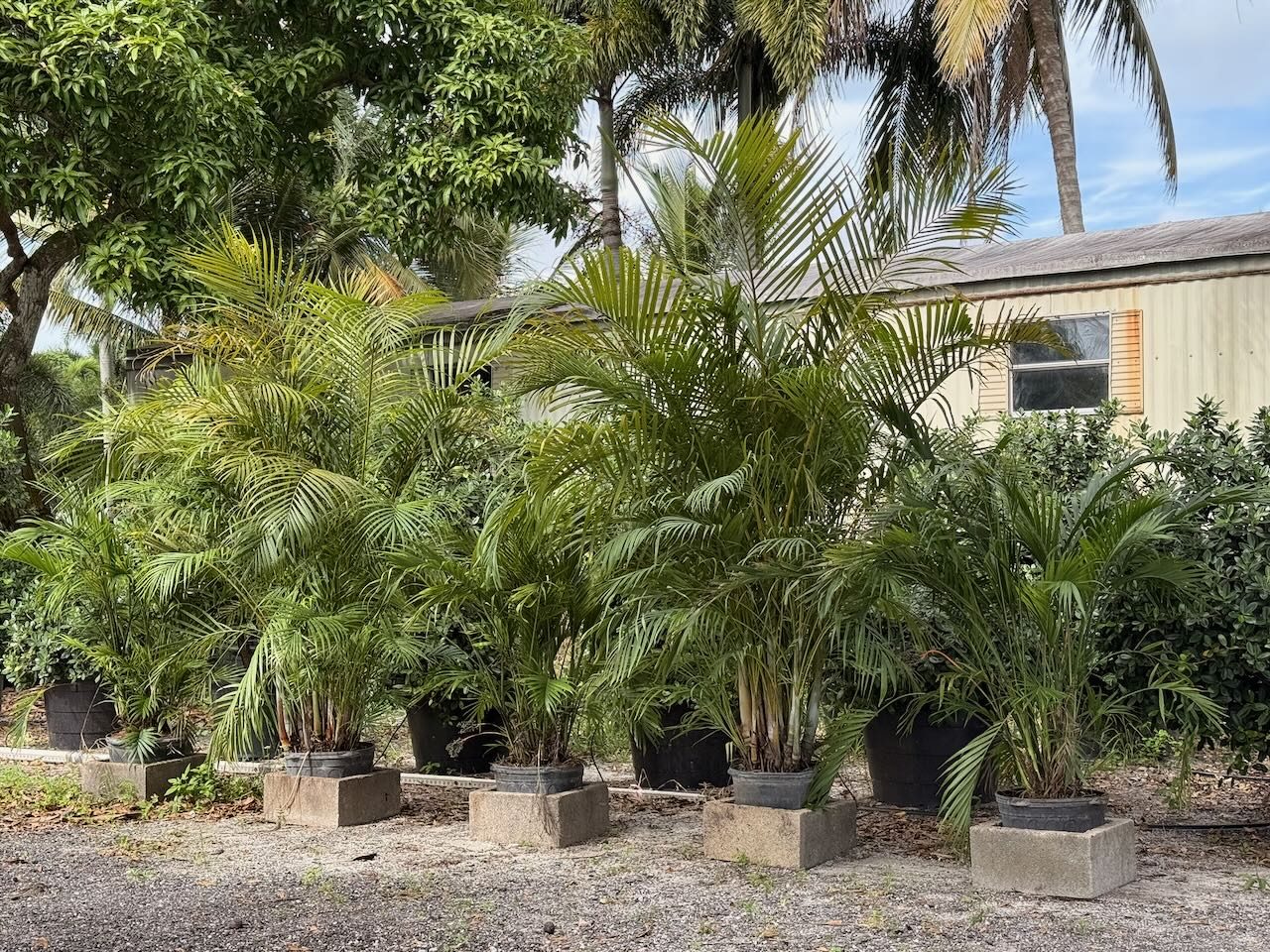
The Areca Palm — Dypsis lutescens — is South Florida's most widely used clumping palm, and it has been for a long time. Landscape contractors specify it constantly, homeowners request it by name, and it shows up on virtually every residential design that calls for a lush, tropical privacy screen. Understanding how to work with it well — sizing decisions, spacing, establishment requirements — makes a real difference in how your jobs perform and how your clients talk about your work.
This guide covers everything a professional landscaper needs to know about specifying and installing Areca Palms in South Florida.
Why Areca Palms Dominate South Florida Landscape Work
The appeal is straightforward: Areca Palms are fast, lush, and client-pleasing. Their arching, feathery fronds create a dense tropical screen that fills in quickly after planting and delivers the kind of resort-style look that South Florida homeowners want. Unlike a shrub hedge that takes a season or two to look intentional, a well-sized group of Areca Palms looks designed and finished from day one.
For landscape contractors, Areca Palms offer a few specific advantages:
- Fast establishment: They push new growth quickly after transplant, especially in the warm months
- Flexible sizing: Available in containers from small to large, plus field-grown for immediate impact
- Versatile placement: Perform well in full sun and part shade — one of the few palms with that flexibility
- Client recognition: Homeowners know and request them — easy to sell on proposals
- Privacy without formality: Creates a dense screen with a natural, tropical feel rather than a stiff hedge look
Container vs. Field-Grown: Choosing the Right Material
Heritage Farms carries Areca Palms in both container and field-grown form, and the choice between them comes down to project timeline and budget.
Container Plants
Container Areca Palms are the standard spec for most residential jobs. They establish reliably, are easy to handle and position, and are available in a range of sizes that work across a variety of budget levels. For clients who are willing to wait a season for full density, container plants at appropriate spacing deliver great long-term results at lower material cost.
Field-Grown Material
Field-grown Areca Palms deliver immediate mass and visual impact that container material can't match at equivalent heights. For high-end residential jobs, commercial properties, or any project where the client wants to see results on install day, field-grown is the right call. The material cost is higher, but so is the perceived value — and clients who see field-grown Arecas go in rarely have complaints about the bill.
Sizing and Spacing for Privacy Screens
The most common application for Areca Palms in South Florida is as a privacy screen along a fence line, property boundary, or pool surround. Getting the sizing and spacing right is what separates a job that looks great in six months from one that looks sparse for two years.
General spacing guidelines:
- 7-gallon containers: 3–4 feet on center for a full screen within 12–18 months
- 15-gallon containers: 4–5 feet on center — faster fill, more immediate visual weight
- 25-gallon containers: 5–6 feet on center — near-immediate screening
- Field-grown: 5–8 feet on center depending on the size of material — immediate impact
One common mistake: spacing Areca Palms too far apart to save on material cost, then having clients complain about gaps for the first year. In most cases, tighter spacing with smaller material is both more cost-effective and produces better results than wide spacing with large plants.
Installation Best Practices
- Plant at grade. Set Areca Palms at the same depth as in the container. Planting too deep — especially burying the base of the trunks — is one of the most common causes of decline. The gold-colored lower trunks should remain above the soil line.
- Water heavily at installation. Drench the root ball and surrounding soil at planting, then water daily for the first two weeks. Consistent establishment moisture is critical.
- Mulch generously. 3–4 inches of mulch around each plant (keeping it away from the trunks) retains moisture and moderates soil temperature during establishment.
- Don't over-amend. South Florida's sandy soils drain well, which Areca Palms appreciate. Excessive amendments can actually hold too much moisture and cause crown rot.
- Sun exposure matters. Areca Palms can handle full sun but their fronds may yellow slightly in intense direct exposure initially. They settle in and green up as they establish. Part shade produces the lushest, darkest green color.
Long-Term Maintenance
On maintenance accounts, Areca Palms are relatively low-effort once established. The main tasks are:
- Fertilization: Apply a slow-release palm fertilizer with micronutrients (including magnesium and manganese) three times per year — spring, summer, and early fall. Yellowing fronds are often a sign of nutrient deficiency, not disease.
- Frond removal: Remove fully brown fronds as needed for appearance. Don't prune green or yellowing fronds — let them complete their life cycle.
- Trunk suckers: Areca Palms produce offshoots at the base. Removing them keeps a cleaner look; leaving them builds a denser clump over time. Discuss client preference upfront.
- Irrigation: Once established, Areca Palms need moderate water. In South Florida's rainy season they're largely self-sufficient; during dry season, supplemental irrigation keeps them looking their best.
Common Issues and How to Address Them
Yellowing fronds: The most common complaint from clients. Usually nutrient deficiency (especially potassium or magnesium) rather than disease. A fertilizer application resolves most cases within one growing cycle.
Crown rot: Caused by planting too deep or chronically wet soil around the crown. Prevention is everything — proper planting depth and good drainage. There is no recovery once the crown is affected.
Ganoderma butt rot: A fungal disease that affects the base of the palm. There is no treatment — affected plants must be removed. Buy healthy material from reputable growers and avoid wounding the base of established palms with equipment.
Frequently Asked Questions
How fast do Areca Palms grow in South Florida?
In good conditions — full sun or part shade, consistent moisture, regular fertilization — Areca Palms can grow 1–2 feet per year. Growth is fastest in the warm, wet summer months and slows significantly in winter.
Are Areca Palms cold hardy?
Areca Palms are cold sensitive and can sustain damage below 35°F. They are appropriate for USDA Zones 10–11, which covers most of South Florida. In colder inland areas or during unusual freeze events, they may need protection or replacement.
Can Areca Palms grow in shade?
Yes — Areca Palms are one of the more shade-tolerant palms available for South Florida landscapes. They perform well in part shade and can handle fairly low light conditions, though full sun produces the fastest growth and fullest canopy.
How do Areca Palms compare to Clusia for privacy screens?
Both are excellent privacy plants, but they deliver a very different aesthetic. Areca Palms create a tropical, airy screen with movement and texture. Clusia creates a dense, solid green wall. For properties where clients want a tropical feel, Areca Palms are often preferred. For maximum opacity and wind protection, Clusia is the stronger choice. Many designs use both in combination.