
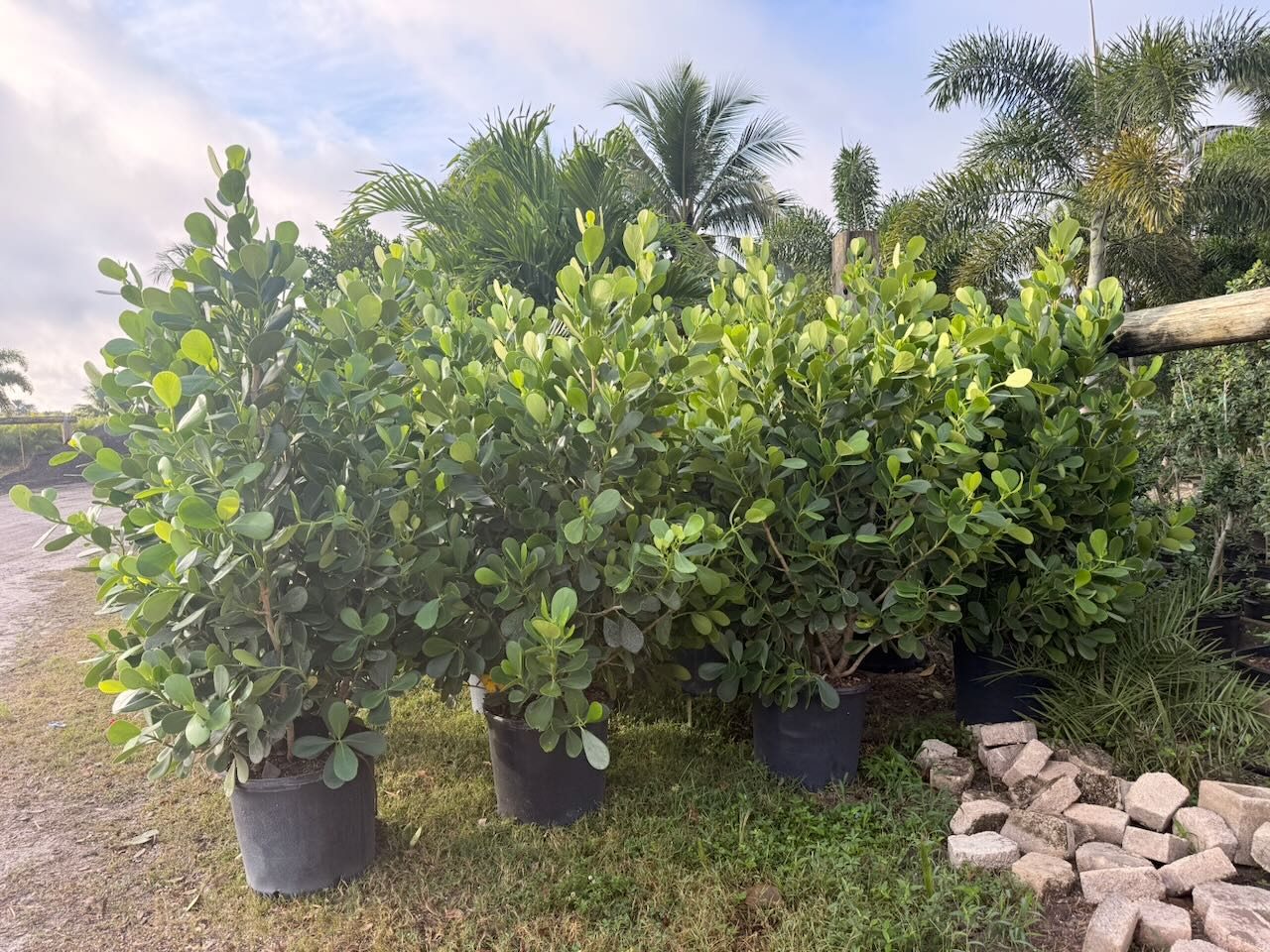
Over the last decade, Clusia — specifically Clusia guttifera, the small-leaf variety — has become the privacy hedge of choice for South Florida landscape contractors. It has largely replaced Ficus hedges in this role, and for good reason: it's tougher, more pest-resistant, and requires far less maintenance once it's in the ground. If you're specifying privacy hedges in Palm Beach, Broward, or Miami-Dade counties, Clusia is likely your first conversation with the client.
This guide covers everything you need to know about installing and maintaining Clusia hedges on professional landscape jobs.
Why Clusia Has Replaced Ficus as the Dominant Hedge
South Florida landscapers who have been in the business long enough remember the era of Ficus hedges — dense, fast, and dramatic. They also remember the whitefly infestations that devastated Ficus across the region and left many hedges looking devastated practically overnight.
Clusia doesn't have that problem. Its thick, waxy leaves are naturally unappealing to whitefly, and it handles South Florida's coastal conditions — salt air, occasional flooding, and intense heat — with minimal stress. Once established, a well-planted Clusia hedge is about as low-maintenance as a living hedge gets.
Clusia Performance Characteristics
- Salt tolerance: Good — handles moderate salt exposure well, though it can show burn in high-spray coastal environments. Better suited for near-coastal than directly oceanfront
- Drought tolerance: High once established — rarely needs supplemental irrigation in mature hedges
- Whitefly resistance: Excellent — one of its biggest advantages over Ficus
- Growth rate: Moderate to fast — fills in within 1–2 seasons with proper spacing
- Mature height: 8–15 feet unmanaged; easily maintained at 4–10 feet with twice-yearly trimming
- Light requirements: Full sun to part shade — very flexible
Sizing and Container Options
Clusia is available in a range of container sizes. Your choice affects both cost and timeline to a full-looking hedge:
- 3-gallon: Most economical for long hedges. Expect 12–18 months to a dense appearance with proper care.
- 7-gallon: The most common spec for residential installs. Good balance of cost and establishment speed — typically looks full within one growing season.
- 15-gallon: Used where clients want a more immediate result or for filling gaps in existing hedges.
- 25-gallon+: Instant privacy — popular on high-end jobs where the client doesn't want to wait. Higher material cost but dramatically accelerates the finished look.
Spacing Guidelines
Spacing depends on the container size and how quickly the client wants a full appearance:
- 3-gallon: 18–24 inches on center
- 7-gallon: 24–30 inches on center
- 15-gallon: 30–36 inches on center
- 25-gallon: 36–48 inches on center
Tighter spacing accelerates fill-in but increases material cost. For clients who push back on price, wider spacing with larger plants can sometimes deliver a better result faster than tight spacing with smaller material.
Installation Best Practices
- Dig wide, not deep. Plant Clusia at the same depth as in the container or slightly above grade. Deep planting can cause stem rot over time.
- Amend sparingly. South Florida's sandy soils drain well, which Clusia prefers. Heavy amendments can create a perched water table effect. Native soil backfill is usually fine.
- Establish water schedule: Water daily for the first 2 weeks, then every other day for 2–4 weeks, then taper off. Once established, Clusia rarely needs supplemental irrigation in South Florida's rainy season.
- Mulch: 2–3 inches of mulch along the hedge line retains moisture and suppresses weeds during establishment.
- Staking: Larger specimens (15-gallon+) may need temporary staking in exposed coastal locations until root systems establish.
Maintenance and Trimming
Clusia hedges generally need trimming every 2–3 months to maintain a clean, dense appearance. In the active growing season (spring and summer), you may need to trim monthly to keep a tight look on maintenance accounts. In the cooler months, growth slows considerably.
When trimming, cut back to just inside the desired line — Clusia responds well to pruning and pushes out dense new growth quickly. Avoid cutting into old, bare wood, as recovery can be slow.
Clusia does not need fertilization to perform well, but a slow-release palm and ornamental fertilizer applied in spring and summer will accelerate growth and help with color.
Clusia vs. Podocarpus: Which Hedge Should You Spec?
This is one of the most common conversations with clients. Both are excellent South Florida hedge plants with strong whitefly resistance, but they deliver a different aesthetic:
- Clusia — Bold, tropical look with large, glossy leaves. More informal and lush. Handles moderate coastal exposure well. Lower maintenance once established.
- Podocarpus — Fine-textured, dark green foliage. Very formal and structured — takes a flat, architectural shear beautifully. Better for upright, tight spaces.
For most residential privacy hedges in South Florida, Clusia is the default recommendation. For pool surrounds, formal estate work, or situations where the client wants a clean, architectural look, Podocarpus is often the better choice.
Frequently Asked Questions
How fast does Clusia grow?
Clusia grows at a moderate to fast rate — roughly 1–2 feet per year under good conditions in South Florida. With consistent moisture and fertilization in the growing season, you can see even faster establishment in the first year.
Does Clusia need irrigation after it's established?
Mature Clusia hedges are remarkably drought tolerant and can often survive on South Florida's natural rainfall alone. However, supplemental irrigation during dry season will keep the hedge looking its best year-round.
Is Clusia safe for coastal properties?
Clusia handles moderate coastal exposure well and is a solid choice for near-coastal properties. For properties with direct, heavy salt spray — right on the water — consider pairing with more salt-tolerant species or using Green Island Ficus instead. Clusia can show leaf burn in the most exposed conditions.