
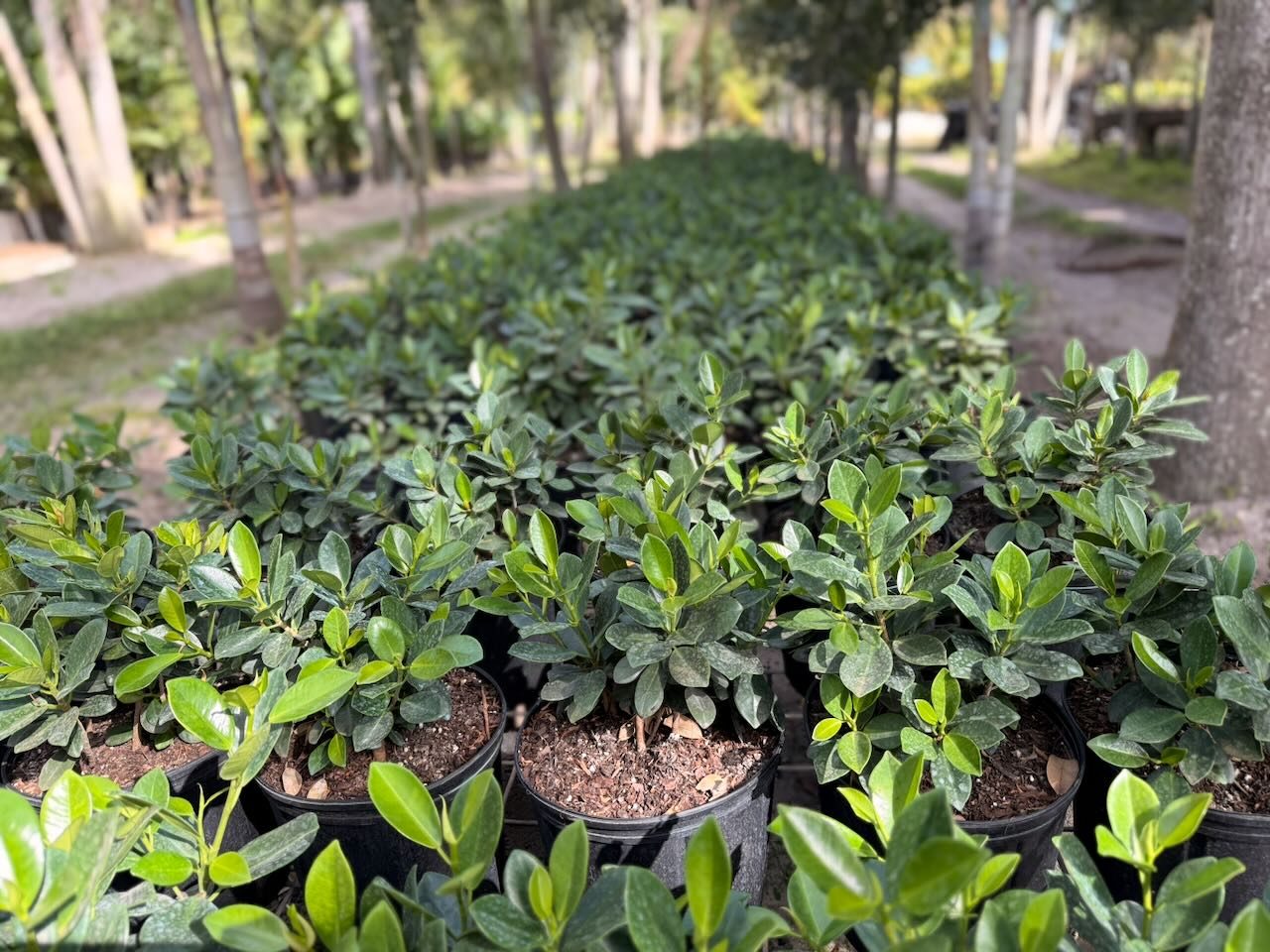
Green Island Ficus — Ficus microcarpa 'Green Island' — is one of the most consistently specified shrubs in South Florida residential and commercial landscape work. It's not flashy, but that's exactly why contractors keep coming back to it: it stays in its lane, holds its form, and rarely causes callbacks. For a plant that shows up in such high volumes, it tends to disappear into the landscape in the best possible way.
This guide covers everything a landscape professional needs to know when specifying and installing Green Island Ficus on a South Florida job.
Why Landscapers Choose Green Island Ficus
The appeal is simple: Green Island Ficus is one of the lowest-maintenance shrubs available in the South Florida wholesale market. Its slow, compact growth habit means it doesn't require constant trimming to look presentable — a major advantage on HOA accounts and maintenance contracts where labor efficiency matters.
The rounded, waxy leaves have a clean, uniform appearance that reads as refined and intentional in almost any design context. It's not a plant that demands attention, but it looks like someone put thought into it — which clients appreciate.
Key advantages for professional use:
- Slow, predictable growth — stays in shape between service visits
- Drought tolerant once established — reduces irrigation dependency
- High salt tolerance — performs in coastal environments
- Full sun to part shade flexibility — works in a wide range of site conditions
- No serious pest or disease problems under normal conditions
Landscape Applications
Green Island Ficus is versatile enough to work across a wide range of applications on South Florida landscape jobs:
Foundation Shrub
This is its classic use — massed along building foundations to soften architecture and fill beds. Its low mature height (under 3 feet without trimming) keeps it from obscuring windows or growing into structures, which makes it popular with clients who want a set-it-and-forget-it foundation planting.
Low Border and Property Lining
Planted in a row, Green Island Ficus creates a soft, informal border that defines edges without the stiffness of a sheared hedge. It works well along walkways, driveways, and property lines where a low, clean edge is desired.
Ground Cover at Scale
On large commercial or estate jobs, Green Island Ficus can be used as a mass ground cover in lieu of sod or mulch. It spreads as it matures, eventually filling in to create a dense, weed-suppressing mat. This is a higher upfront plant cost but dramatically reduces long-term maintenance.
Accent and Container Work
Its compact form and attractive foliage make it a natural fit for container plantings at entries, pool decks, and patios. It tolerates the restricted root environment of containers well and maintains its appearance with minimal intervention.
Sizing and Spacing
Green Island Ficus is typically available in 3-gallon, 7-gallon, and larger container sizes. Selection depends on project budget and timeline:
- 3-gallon: Most economical for large-scale installs. Slower to fill in — budget 12–18 months for a full appearance on tight spacing.
- 7-gallon: The most common spec for residential work. Good balance of cost and establishment speed.
- Larger sizes: Used for instant impact on high-end installs or to anchor key areas in the design.
For borders and massing, plant 18–24 inches on center for a full look within one growing season on 7-gallon material. For ground cover applications, 24–30 inches on center works well at scale.
- 15-gallon: The premium spec for high-visibility foundation and border work. Plants arrive full and established — excellent choice when the client wants an immediate, finished appearance.
- 25-gallon: Top-of-market material delivering instant impact. Used on estate installs and commercial projects where Green Island Ficus is a featured design element. These are the most salt-tolerant, proven specimens available — grown longer and hardened to South Florida's conditions.
Installation Notes
Green Island Ficus is straightforward to install, but a few points are worth noting:
- Wear gloves. The milky sap inside the stems and leaves can cause skin irritation in sensitive individuals. Brief your install crew and provide gloves for any pruning or cutting work.
- Soil prep: Well-draining soil is preferred. In South Florida's sandy soils, this is rarely an issue, but avoid low-lying areas with standing water.
- Establishment watering: Water consistently for the first 2–3 months after installation. Once established, Green Island Ficus is quite drought tolerant, but establishment is critical.
- Mulch: 2–3 inches of mulch around each plant helps retain moisture and regulate soil temperature during establishment.
Long-Term Maintenance
One of Green Island Ficus's biggest selling points on maintenance accounts is its low trimming frequency. A light trim once or twice a year is typically all it needs to maintain a clean appearance. It won't outgrow its space the way faster-growing shrubs do.
No significant pest issues are common under normal South Florida conditions. If plants are stressed from inadequate water or poor drainage, they can be susceptible to scale insects — but well-established plants in appropriate conditions rarely have problems.
Frequently Asked Questions
What is the mature size of Green Island Ficus?
Without regular trimming, Green Island Ficus typically reaches about 3 feet in height and spreads wider as it matures. It's one of the few shrubs in South Florida that stays low and wide naturally, without requiring constant height management.
Is Green Island Ficus the same as regular Ficus?
No. Green Island Ficus is a specific cultivar of Ficus microcarpa, bred for its compact, rounded growth habit. It does not grow into the large tree form that standard Ficus trees are known for. Its root system is also far less aggressive than standard Ficus, making it safe near sidewalks and structures.
Can Green Island Ficus be grown in shade?
Yes — it tolerates part shade well, though it performs best and maintains the densest form in full sun. In heavy shade, it may become more open and leggy over time.
Is it salt tolerant?
Yes. Green Island Ficus has good salt tolerance, making it a reliable choice for coastal properties and environments with salt spray or brackish conditions.